There are moments when evidence lands with such clarity that it becomes impossible to “unsee”.
New national findings by Dr Tom Roberts and Dr Jane Levell (University of Bristol) is due to be shared at a parliamentary launch hosted by Jess Asato MP on behalf of the National Child Mortality Database (NCMD) - map the pre‑injury, injury and post‑injury factors that underpin fatal knife crime experienced by children and young people in England. Drawing on NCMD records from 2019–2024, the analysis provides the strongest national picture to date of the adversities many of these children were living with long before the moment of harm.
You can read the full report here.
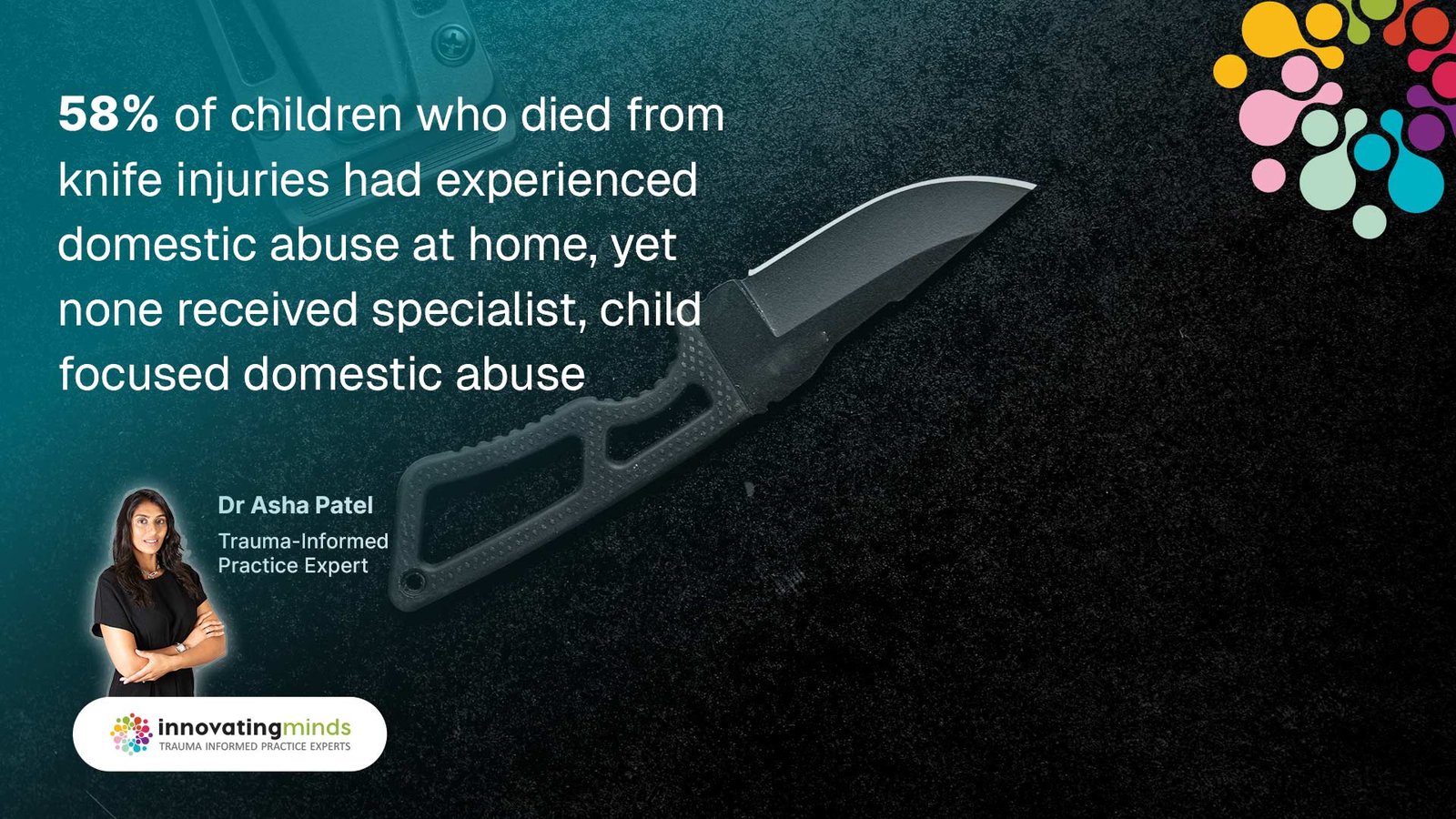
One statistic should stop every system leader in their tracks: 58% of children who died from knife injuries had experienced domestic abuse at home, yet none had received specialist, child‑focused domestic abuse support.
This is not simply an implementation gap. It is a prevention gap.
And it is one we can close, if we are willing to reframe what “violence prevention” really means.
Knife fatalities are telling us that prevention starts earlier than we’ve been resourcing
The new evidence is unflinching about the limits of response once severe harm has occurred. In the detailed clinical cases, 75.9% sustained fatal injuries to the chest or neck, and 60.3% died before reaching hospital. This is a stark reminder that while emergency care matters, fatality prevention must begin much earlier.
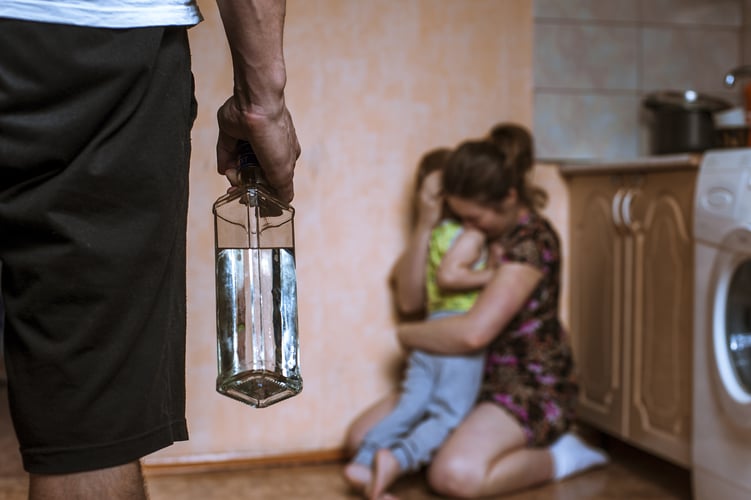
So when we talk about reducing serious violence, we have to include the earliest places violence is most commonly experienced by children – at home. The same evidence warns that treating “knife crime” and domestic abuse as separate policy concerns can obscure how these harms intersect in children’s lives.
For those of us working with children affected by domestic abuse, this is tragically familiar.
We meet children who have become experts in:
- scanning for danger,
- suppressing feelings to stay safe,
- reading adults’ moods like weather systems,
- and carrying the invisible burden of responsibility for what is happening around them.
Over time, these survival adaptations can harden into patterns that make children and young people more vulnerable to exploitation, school exclusion and experiencing mental ill health. The research findings demonstrated that almost half of the young people had been excluded from school prior to their death and only 29.3% were referred to CAMHS whilst sadly some children died while waiting assessment.
Prevention opportunities are often lost because the system around the child is too often focused on responding to the behaviour as opposed to recognising that the behaviour is likely to be trauma-reaction. This isn’t because the frontline practitioners do not care, it’s because they do not have adequate access to the training, resources and ongoing clinical support to offer an early trauma-informed response. In addition, the system has built a culture of referring children and families onto ‘specialist services’ whereby they are faced with long waiting lists, thresholds and an unrealistic expectation of what engagement looks like.
Domestic abuse is not “background context”, children are direct victims
Domestic abuse does not harm children indirectly, it harms them developmentally, emotionally, socially, and neurologically. The new findings reinforce that children must be treated as primary victims in their own right.
The policy recommends that the Domestic Abuse Act 2021 goes even further by providing children and young people an explicit statutory right to access domestic abuse support. This would create a legal entitlement and ensure that all child victims receive early, specialist and in independent support.
I whole heartedly agree with this policy recommendation because access to early help for children affected by domestic abuse continues to be a postcode lottery. Access to early help within the community is still dependent on a small number of commissioners, Public Health Practitioners and Directors of Services that are innovators and are willing to invest in its existing workforce to enable children and young people to access early help by people they already know and trust.
What a trauma‑informed prevention pathway looks like in practice
If prevention begins early, then the question becomes: what do we put in place that is scalable, inclusive, and rooted in evidence about what heals?
At Innovating Minds, our Healing Together programme exists for this reason.
Healing Together is a community‑delivered, trauma‑informed programme for children aged 5+ affected by domestic abuse, designed to strengthen the protective factors that reduce vulnerability over time. It is delivered through the adults and services children already know, family hubs, early help teams, schools, community provision and it equips frontline practitioners with resources and clinical support to offer timely, safe, child‑centred help.
This matters because the evidence is telling us that children are not reliably reaching specialist support, even when domestic abuse is known.
So we have to build capacity where children already are.
How Healing Together reduces risk: strengthening protective factors that interrupt pathways to harm
When we talk about “reducing violence,” it can sound abstract. Healing Together reduces risk through very practical mechanisms:
1) Reducing the risk of exclusion by changing the story behind behaviour
In many cases, systems respond to behaviour without recognising it as a possible indicator of domestic abuse or wider trauma. The training and access to ongoing clinical support enables frontline practitioners to recognise and respond to trauma reactions in ways that helps the children and young people to feel safe whilst also accessing moments of co-regulation. The frontline practitioner shifts from being trauma-aware to being trauma-informed and responsive.
Healing Together helps practitioners and schools:
- identify trauma reactions early,
- respond with co‑regulation rather than escalation,
- support children to engage in their education
Here from the children & practitioners
- Aaron’s story from school exclusion to planning his future
- Helping a 5 year old child access her education
2) Building and repairing relationships (family and peers)
Children and young people often find it difficult to feel regulated and struggle to articulate their feelings which impacts their sense of belonging and how safe they feel around their family and peers.
Healing Together supports:
- a child’s ability to differentiate their emotions.
- verbally sharing of their emotions.
- access to body-based calming tools.
3) Keeping families together safely, supporting edge‑of‑care and reunification
There is a great amount of evidence that highlights that children that are in care or on the edge of care are more vulnerable to experiencing violence and engaging in knife crime. The delivery of the Healing Together programme within children’s homes and early help teams has successfully reduced the risk of violence.
Where safe and appropriate, Healing Together has supported children:
-
- on the edge of care to return home,
- and children in care to move back home with their family.
- Reducing the risk for children that are on the edge of care – Manchester City Council
- A child’s journey out of care - Watch the video below 👇
4) Early help that is inclusive by design
The research recognises that there are significant racial, gender and socioeconomic inequalities that characterize child knife related deaths. The Healing Together programmes are underpinned by the model ‘Breaking the Cycle of Childhood Trauma’Ó which ensures that access to early help is inclusive by design.
The programme is:
- community‑delivered,
- translated into different languages,
- and designed to support children with special educational needs and neuro-diverse needs
The “missing link” is often workforce confidence: Healing Together trains the adults around the child
The national evidence also points us toward a workforce challenge: even when children are known to services, pathways into specialist child domestic abuse support are inconsistent, and too often dependent on adult thresholds or parental engagement.
Healing Together addresses this by training frontline practitioners to:
- recognise the impacts of domestic abuse on children and young people,
- understand trauma responses across ages and developmental stages,
- use programme resources confidently,
- and access clinical support so they’re not holding complexity alone.
This means children can access early help from people they already trust—and services can respond sooner, not only when risk becomes crisis.
What this looks like across local systems (examples from practice)
Healing Together has been integrated in a range of ways because no two local areas are identical, but every area can build a coherent pathway.
- Sefton Council: Used Healing Together as part of a whole family approach to domestic abuse enabling children to access early help while a parent that harms engages in behaviour change work.
- Camden Council: Integrated within Family Hubs and early help service to strengthen community access.
- Kent Family Hubs: Implemented as a core offer, recognising high levels of domestic abuse impact and fragmented local provision.
- Warrington Council: A Tier 1 approach through training schools and early help teams to support children affected by domestic abuse.
- Dorset Council: Integrated within early help, responding to the reality that direct support for children was not readily available.
These examples point to an important truth: effective prevention is not always about creating entirely new services, its often about making existing services trauma‑capable, connected, and confident.
What I want leaders to take from the new national evidence
The NCMD‑linked findings reinforce that violence is rarely “sudden.” It is often preceded by patterns of harm and missed opportunities for support.
If we are serious about reducing knife fatalities, we must treat domestic abuse support for children as a foundational prevention strategy, not an optional add‑on.
The policy briefing recommends a statutory right to specialist domestic abuse support for all children who experience domestic abuse, decoupled from adult thresholds and parental engagement. I support that direction because prevention cannot rely on chance, postcode, or crisis.
But while national policy evolves, we can act now locally by building trauma‑informed pathways that:
- keep children connected to education,
- reduce exclusion,
- integrate responses to trauma and neurodivergence,
- and create community‑delivered early help that is accessible, inclusive and trusted.
Healing Together is one practical way to do that, at scale, with fidelity, and with compassion.
A closing thought: prevention is a promise we keep
Every fatality is a life cut short. But it is also a message about what we must do differently.
When 58% of children who died from knife injuries had experienced domestic abuse, yet none received specialist child‑focused domestic abuse support, our mandate becomes clear: we must reach children earlier, and we must reach them differently.
Trauma‑informed practice is not a trend. It is the disciplined, evidence‑aligned work of building safety, belonging, and creating the condition for healing so that children do not have to find protection in risky places.
Next steps
If you’re a commissioner, system leader, school leader, or practitioner, my invitation is simple: let’s stop asking children to be the exception who “makes it through” and start building the conditions that make thriving the norm.
If you’d like to understand how Healing Together can strengthen your local early help pathway for children affected by domestic abuse, reducing risk of exclusion, supporting emotional literacy, and building protective relationships, you can learn more here: Learn more about Healing Together
And if you’re ready to explore what a trauma‑informed practice approach could look like in your setting or across your system, you can book a call with me directly: Book a consultation with Dr Asha Patel
Dr Asha Patel
Trauma‑Informed Practice Expert
Healing Together is delivered through the community and the trusted adults already around children, building trauma‑capable systems that respond earlier, not only at crisis point.