When services discuss trauma-informed practice, conversations often focus on children, families and communities. And rightly so.
However, there is another group of people whose wellbeing is equally important.
The workforce.
Within education, health and social care, practitioners are exposed to distress, trauma, risk and uncertainty every day.
They support families through some of the most difficult experiences of their lives.
They absorb stories.
They manage complex emotions.
They hold extraordinary responsibility.
Yet many systems were never designed to adequately support the people delivering this work.
The Myth Of The Resilient Practitioner
One of the most damaging assumptions within helping professions is that good practitioners should simply cope.
That exposure to difficult situations is "part of the job."
That professional commitment alone will sustain people indefinitely.
The evidence tells a different story.
Without support structures, practitioners become vulnerable to:
- Burnout
- Compassion fatigue
- Emotional exhaustion
- Vicarious trauma
- Reduced job satisfaction
When this happens, everyone is impacted.
Practitioners suffer.
Teams suffer.
Services suffer.
Families suffer.
Creating The Professional Backbone
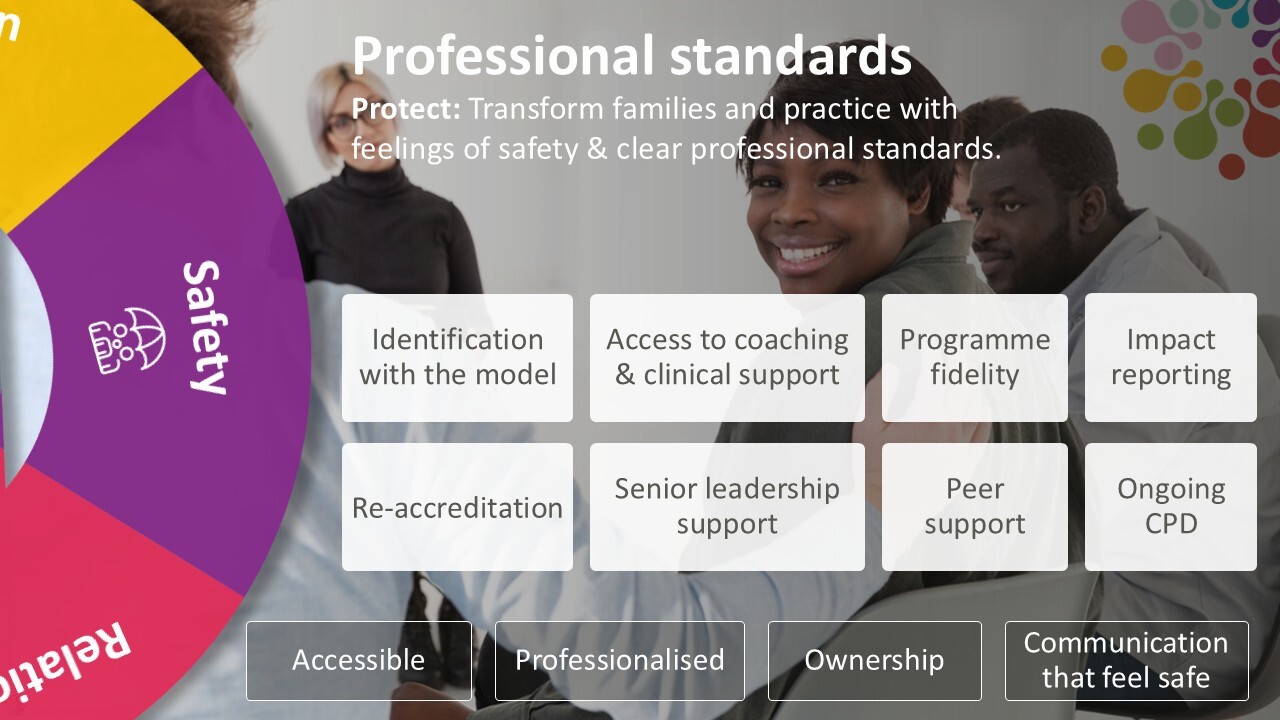
Within the Healing Together Framework, Safety refers to the professional standards and structures that make trauma-informed practice sustainable.
This includes:
Clinical Supervision
-
Regular opportunities to reflect, process and strengthen practice.
Ongoing CPD
-
Keeping knowledge and skills current and confidence high.
Reflective Practice
-
Creating space for learning rather than simply reacting.
Impact Measurement
-
Understanding what is working and where support is needed.
Leadership Support
Ensuring trauma-informed practice remains a strategic priority.
Together these elements create a professional backbone capable of sustaining change.
Why Workforce Safety Matters
A well-supported workforce is more likely to:
- Remain in the profession
- Feel confident in their role
- Develop stronger relationships
- Deliver consistent support
- Feel emotionally regulated
- Evidence impact
In other words, workforce safety directly influences outcomes for children and families.
Reflection For Leaders
Ask yourself:
- How confident are practitioners in supporting trauma and adversity?
- Do our team have access to evidence-based resources to support children and families affected by trauma?
- What supervision structures currently exist?
- How do we monitor workforce wellbeing?
- How do we evidence professional development?
- How do we know what we are offering is working?
The answers often reveal the true strength of a service's trauma-informed foundations.
Looking Ahead
Safety creates the conditions for the next stage of the framework.
Relationships.
Because when practitioners feel supported, they are far more able to build the healthy, consistent and trusted connections that drive meaningful change.
Next Reading
Relationships: The Hidden Driver of System Change
A message from Dr Asha Patel
"Creating lasting change starts with understanding the experiences that shape people's lives. Through this webinar series, I look forward to sharing practical approaches that help professionals build safer, more compassionate, and more effective environments where everyone can thrive."
I am looking forward to seeing you.
Join the Waiting List 🔗