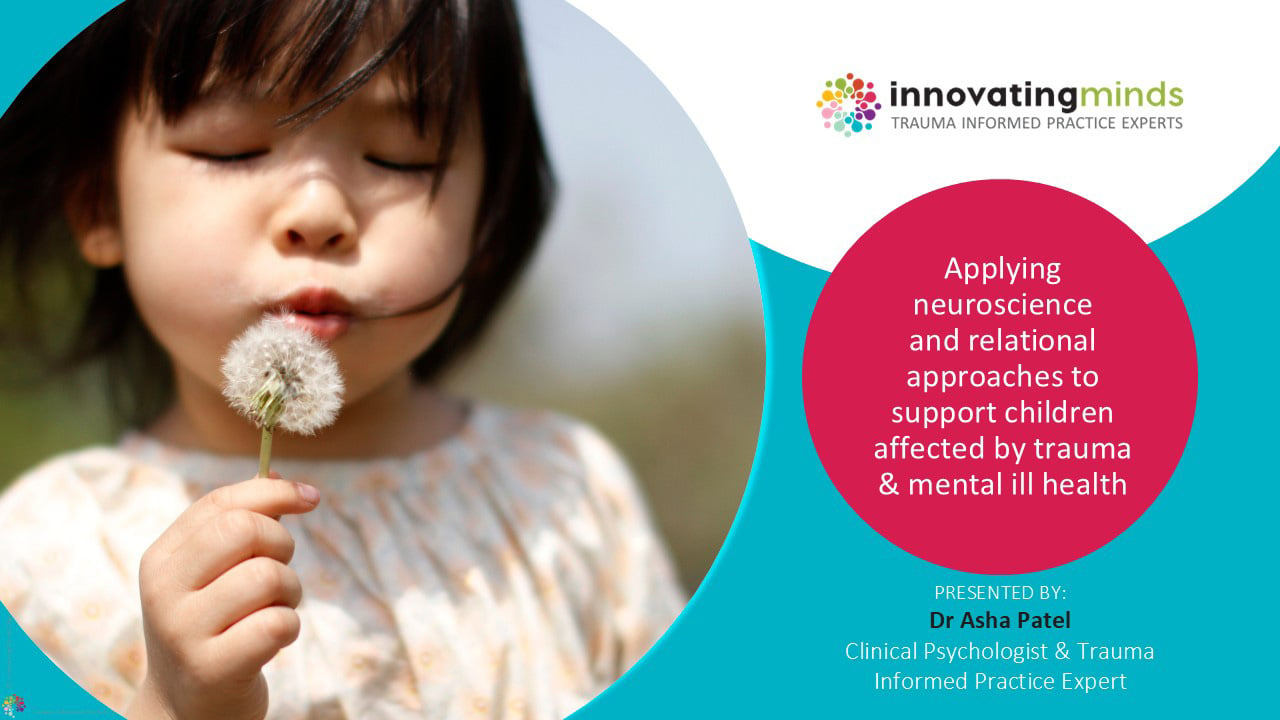
Key reflections from Dr Asha Patel's TES SEND Show 2026 presentation
When children experience trauma, the impact doesn't simply disappear once the traumatic event is over.
Trauma lives on in the body, the nervous system, the brain and the way children experience the world around them. Yet too often, adults focus on the behaviour they can see rather than the experiences that sit behind it.
At the Tes SEND Show 2026, Dr Asha Patel explored how neuroscience and relational approaches can help us better understand and support children affected by trauma and mental ill health.
Trauma Is Defined By Experience
One of the most important principles of trauma-informed practice is recognising that trauma is not defined by the event itself.
As Dr Asha Patel explained, it is the individual's experience that determines whether something is traumatic.
For some children, trauma may stem from a single catastrophic event. For others, it may result from prolonged experiences of fear, overwhelm, neglect, abandonment or abuse.
The impact can be profound because trauma affects the way the brain and nervous experiences feelings of safety and danger.
Trauma Is Stored in the Body
Traumatic experiences are stored as sensory experiences within the body.
Certain sights, sounds, smells, movements or physical sensations can activate the traumatic experience long after an event has passed.
When adults do not understand this, behaviours can easily be misinterpreted as defiance, attention-seeking or disengagement.
In reality, many children are responding to feeling unsafe and perceived threats that their nervous system is scanning for.
From Connection to Protection
Dr Asha Patel highlighted a powerful quote from Dr Stephen Porges:
"Trauma compromises our ability to engage with others by replacing patterns of connection with patterns of protection."
Children who have experienced trauma are often focused on survival rather than learning, relationships or achievement.
This can show up as:
- Hypervigilance
- Emotional outbursts
- Withdrawal
- Difficulty concentrating
- Sleep disruption
- Emotional numbness
The question for practitioners is not, "What's wrong with this child?"
Instead, we should ask:
"What has this child experienced?"
Understanding Mental Health Through a Trauma Lens
The presentation explored several common mental health difficulties that can affect children and young people.
Anxiety, for example, is a normal human response designed to keep us safe. However, when anxiety becomes persistent, intense and disruptive to daily life, it can develop into an anxiety disorder.
Likewise, depression involves far more than feeling sad. It can affect mood, motivation, physical health, thinking patterns and relationships.
Understanding these experiences through a trauma-informed lens helps professionals move away from pathologising and towards curiosity and compassion.
Behaviour Is Often a Coping Strategy
One of the most valuable reminders from the session was that coping strategies serve a purpose.
Children often use behaviours that challenge the adults around them because it helps them to survive, manage distress or feel safe.
The challenge is that some coping strategies may bring short-term relief while creating longer-term difficulties.
Rather than asking children to simply stop a behaviour, trauma-informed practitioners seek to understand:
- What need is being met?
- What function does the behaviour serve?
- What is the child trying to communicate?
This shift in perspective can transform the support we provide.
What Helps?
Supporting recovery requires more than policies and procedures.
Relationships matter.
Dr Asha Patel emphasised several key principles including:
- Building safe, trusted relationships
- Using co-regulation instead of expecting self-regulation
- Understanding the connection between body and brain
- Avoiding punitive and humiliating responses
- Preventing re-traumatisation
- Using body-based calming and regulation strategies
Perhaps most importantly, we must also recognise that being safe and feeling safe are not always the same thing.
The Cost of Caring
The final part of the session focused on vicarious trauma.
Professionals who regularly hear about, witness or support individuals affected by trauma can experience significant emotional impact themselves.
This is why reflective practice, clinical supervision and supportive professional cultures are so important.
Supporting others starts with ensuring we are also supported.
Final Thoughts
Trauma-informed practice is not a programme or intervention. It is a way of being.
When we apply neuroscience, compassion and relational approaches together, we create environments where children can feel safer, more connected and better able to thrive.
And when we begin to look beyond behaviour to the experiences underneath, we open the door to meaningful, lasting change.
Want more insights from Dr Asha Patel?
Subscribe to our Local Authority Insights Series for practical trauma-informed guidance, evidence-based resources and strategies that help professionals create lasting change for children and young people.